


Whether you’re combination-feeding, expressing, or moving to formula, the right bottle makes feeds calmer for everyone — and the wrong one means gas, fuss and a baby who fights the teat. After trying more bottles than I’d like to admit, I’ve learned it mostly comes down to material and teat, not marketing. Here are the ones I’d actually put in my steriliser, sorted by what they’re made of so you can pick the right fit fast.
Quick Summary — my top picks
Tap any name to open it on Amazon.in. Full write-ups below.
- Best overall Philips Avent Anti-Colic
- Best for newborns Avent Natural Response
- Best budget LuvLap Natura Flo
- Best steel Mee Mee Steel Bottle
- Steel for newborns Kidbea Steel Bottle
- Best 2-in-1 Mylo 2-in-1 with Spoon
🍼 BPA-free plastic & anti-colic
Light, unbreakable and easy for little hands later on. The everyday default — just choose BPA-free and a good anti-colic teat.
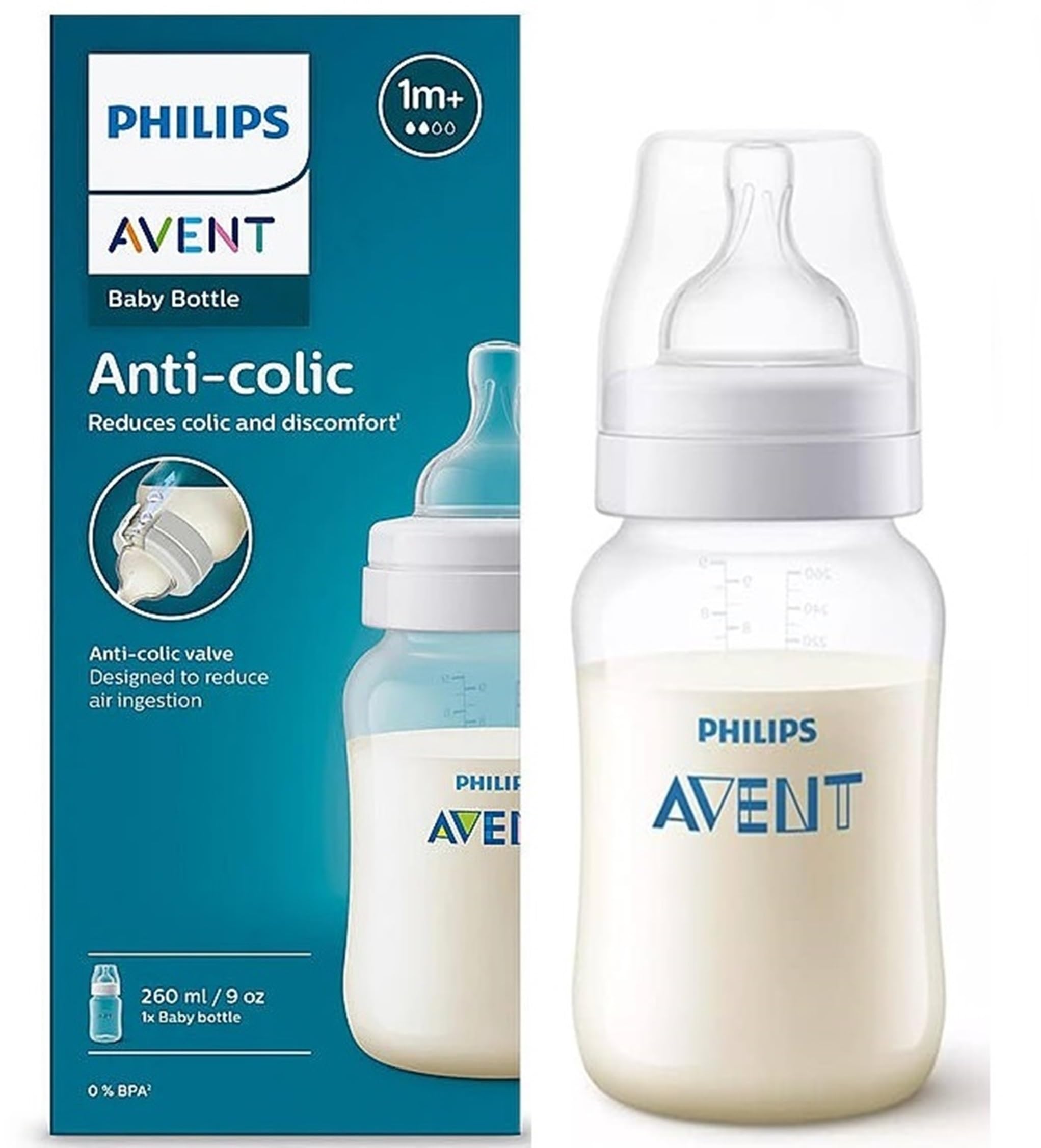
Philips Avent Anti-Colic (260ml)
The one I recommend first. Its anti-colic valve genuinely cuts down the air babies swallow, which means less gas, fewer bring-ups and a settled tummy. The wide teat has a natural shape babies accept easily, parts are minimal to clean, and Avent’s teats and spares are available everywhere in India — so you’re never stuck.
Best for: most babies, most of the time — the safe, do-everything choice.
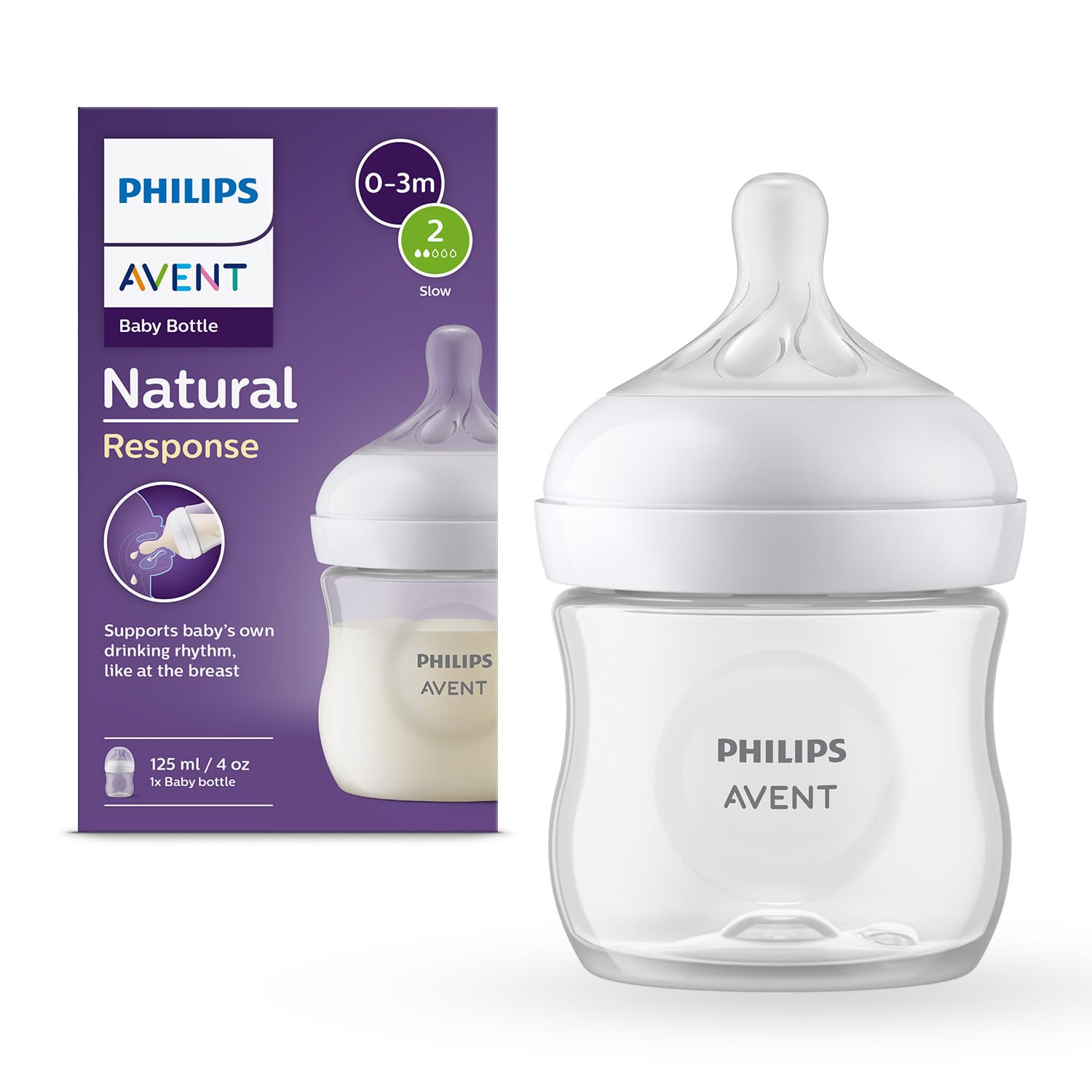
Avent Natural Response (125ml)
Designed for breastfed babies who also take a bottle. The teat only releases milk when baby actively drinks — closer to how nursing works — which makes switching between breast and bottle far less of a fight. The smaller 125ml size is perfect for tiny newborn feeds.
Best for: combination feeding and avoiding nipple confusion in the early weeks.

LuvLap Natura Flo Wide-Neck (150ml)
Proof you don’t have to spend big for a good bottle. A wide-neck, anti-colic design that’s easy to fill and easy to clean, from a trusted Indian brand, at a fraction of the imported price. A brilliant “buy a few of these” workhorse for the everyday rotation.
Best for: stocking up affordably, and for daycare or grandparents’ place.
🥛 Stainless steel — rust-free & long-lasting
No BPA worries, no scratches harbouring germs, and they take a knock without shattering. Increasingly the Indian parent’s favourite.

Mee Mee Steel Feeding Bottle (240ml)
If you’re wary of plastic, steel is the answer — and Mee Mee’s is a well-made, food-grade option that lasts for years and hands down to a second baby. It won’t scratch, cloud or absorb smells, and it keeps milk at temperature a little longer. A genuinely hygienic, buy-once choice.
Best for: parents avoiding plastic entirely, and anyone wanting a bottle that lasts.
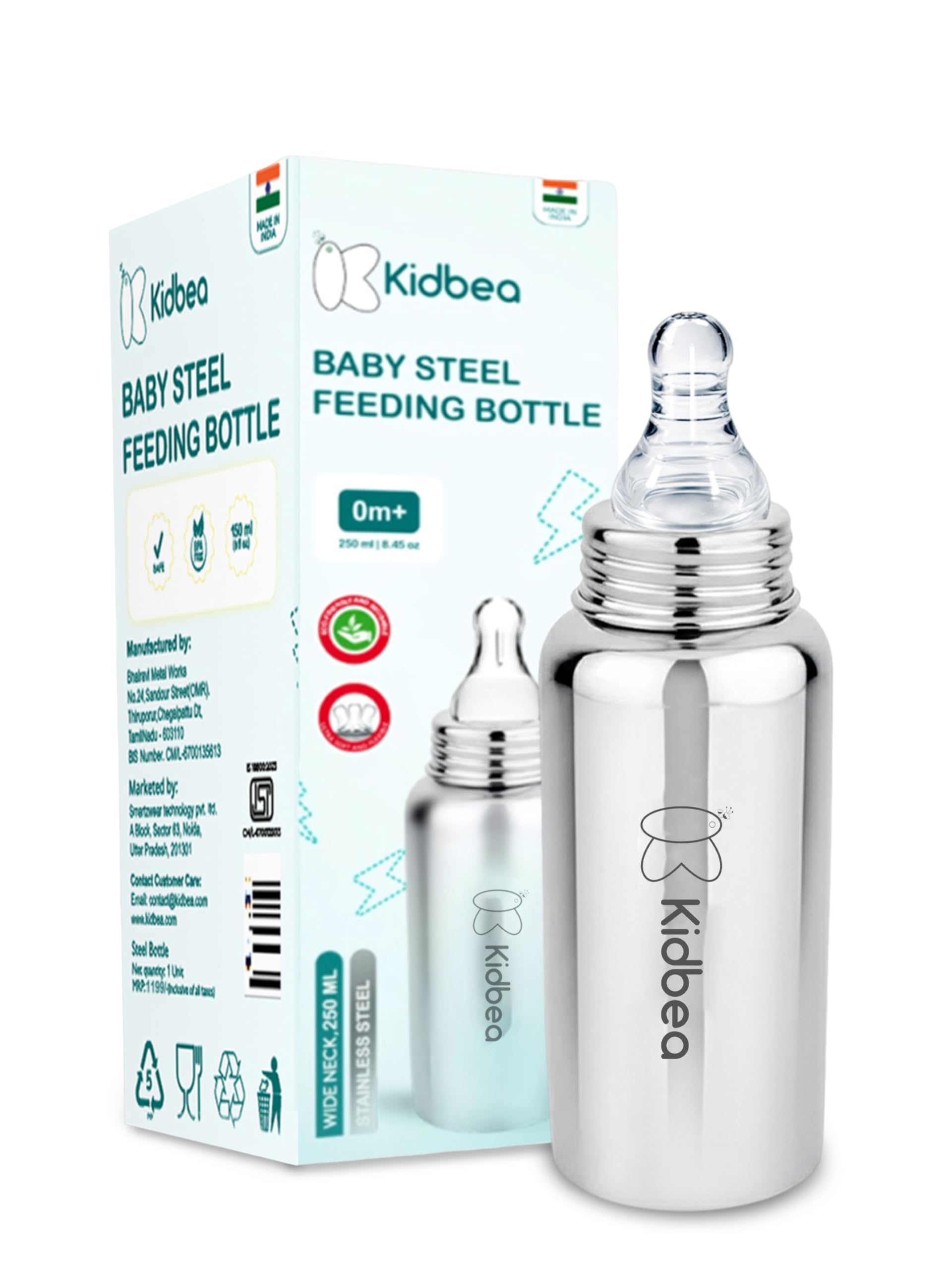
Kidbea Stainless Steel (250ml, 0m+)
A steel body paired with a soft silicone teat gentle enough for newborns — the best of both worlds. Rust-free 304-grade steel with clear volume markings, so you get the durability of steel without a stiff teat. Comes newborn-ready and grows with baby.
Best for: starting a newborn on steel from day one, with a gentle latch.
🥄 2-in-1 & weaning
Clever hybrids for when milk starts sharing the menu with cereal and purees.
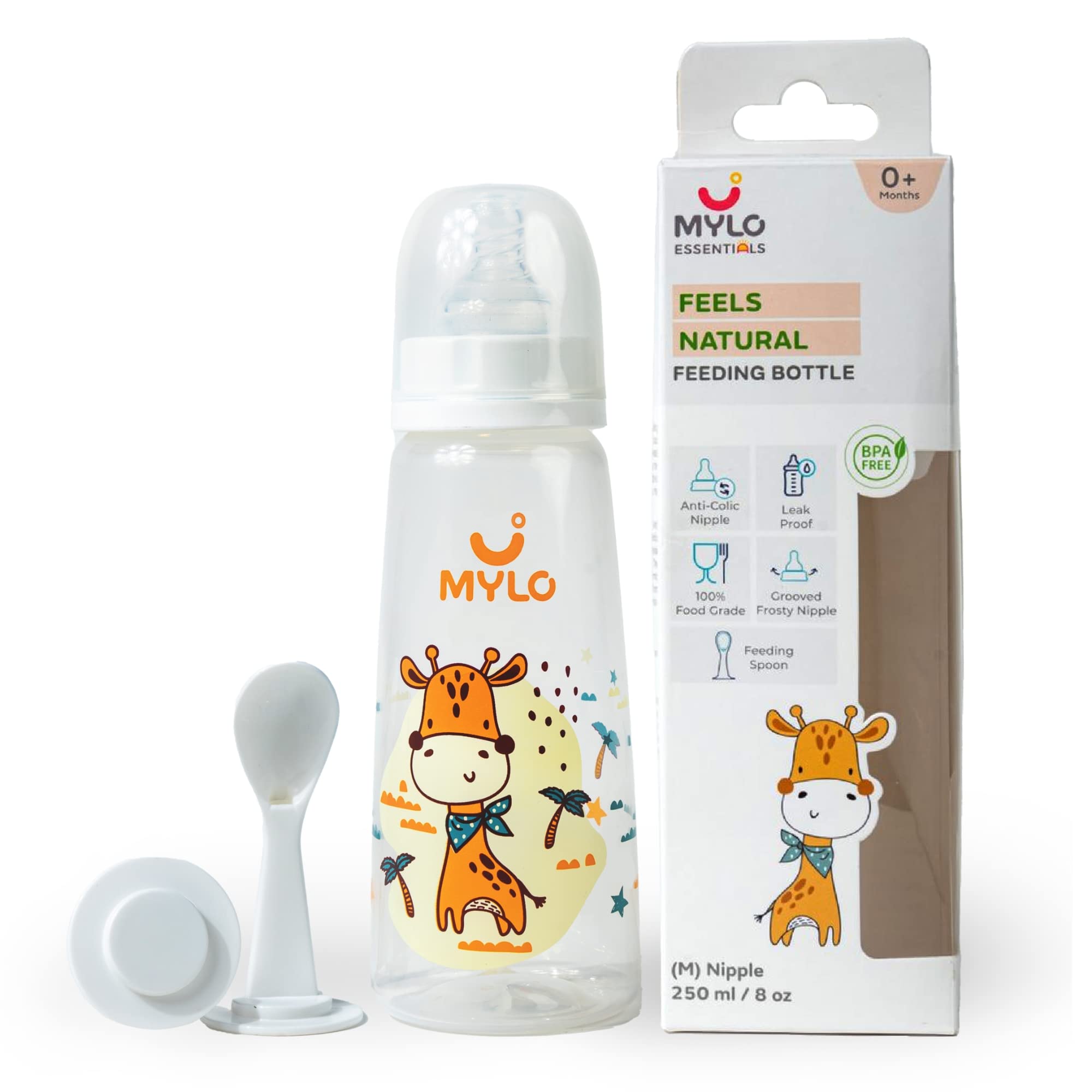
Mylo 2-in-1 Feeding Bottle with Spoon (250ml)
A bottle with an attachable spoon top — genuinely handy once you start cereal or thin porridge around 6 months. You can feed milk and first solids from one hygienic unit, and it’s a neat, low-cost thing to keep in the bag for outings once weaning begins.
Best for: the weaning window, and feeding cereal on the go.
Which teat flow for which age?
The teat (nipple) flow matters as much as the bottle. Too fast and baby gulps and splutters; too slow and they tire and fuss. A rough guide:
| Baby’s age | Teat flow | Why |
|---|---|---|
| 0–1 month | Slow / newborn | Tiny sips, prevents choking and gulping air |
| 1–3 months | Slow–medium | Baby drinks a little faster but still needs control |
| 3–6 months | Medium | Stronger, more efficient feeding |
| 6 months+ | Fast / variable | Bigger feeds; some teats add thicker-feed flow |
How to choose a baby bottle
- Match the teat to your baby, not the box. If feeds are gassy and fussy, an anti-colic valve and the right flow usually fix it faster than switching brands.
- Wide-neck teats suit breastfed babies. The broader, breast-like shape makes going between breast and bottle far smoother.
- Steel or glass if you want zero plastic. Both are hygienic and long-lasting; steel just won’t shatter, which matters once baby holds the bottle.
- Start small, size up. 120–125ml bottles for newborns, 240–260ml once feeds grow. No point buying big bottles for tiny early feeds.
- Buy in a set of a few. You’ll always have a clean one ready. And whatever you choose, sterilise properly (more on that below).
Frequently asked questions
How many feeding bottles do I need?
For exclusive bottle-feeding, 5–6 bottles means you always have clean, sterilised ones ready between washes. If you’re mostly breastfeeding and bottle-feeding occasionally, 2–3 is plenty. Buy the smaller size for newborns and add larger ones as feeds grow.
Which is better — plastic, steel or glass bottles?
All work; it’s about your priorities. BPA-free plastic is light and unbreakable. Stainless steel is rust-free, durable and plastic-free. Glass is inert and easy to see through but heavier and breakable. Many Indian parents now prefer steel for durability and peace of mind.
What is an anti-colic bottle and do I need one?
An anti-colic bottle has a valve or vent that reduces the air a baby swallows while feeding, which can mean less gas, spit-up and fussiness. If your baby is windy or unsettled after feeds, it’s well worth choosing one.
How do I stop my breastfed baby refusing the bottle?
Use a wide, breast-shaped teat with a slow flow (like the Natural Response), have someone other than mum offer it, keep baby upright, and try when they’re calm and only a little hungry — not ravenous. Patience over a few days usually wins.
How often should I replace baby bottles and teats?
Replace teats every 1–2 months (or sooner if they look worn, sticky or discoloured), and bottles if they crack, cloud or get scratched. Steel and glass last far longer than plastic, which degrades with repeated sterilising.
My one recommendation
For most parents, the Philips Avent Anti-Colic is the safe, do-everything pick — a proven anti-colic teat, easy cleaning and spares you can find in any shop. If you’d rather skip plastic altogether, the Mee Mee Steel Bottle is the buy-once, lasts-for-years choice. Pick your material, match the teat flow to your baby’s age, and feeds get a whole lot calmer.
Here’s to calm, happy feeds, mama,
~ Surabhi
A note: Honest, hands-on picks for Indian parents, not sponsored placements. Always sterilise bottles and teats before use, and replace teats that look worn. As an Amazon Associate I earn from qualifying purchases; availability and specs change, so confirm on Amazon before buying.


