


A useful baby room starts with the tasks it needs to support, not a matching furniture set. This research-based guide compares storage, changing, seating and play-room formats for Indian homes. It is not a hands-on test of these products. Use the space checks below before opening a product listing.
Small room? Start with the storage problem
You do not need a complete matching nursery set. Measure the space, reuse suitable storage you already own, then compare the smallest useful addition.
| What needs a home? | Format to compare | Measure or verify |
|---|---|---|
| Diapers, wipes and spare clothes | Portable caddy | Base size, compartment fit, handles and cleaning instructions |
| Folded clothes and spare linen | Wardrobe or existing cupboard | Assembled footprint, door clearance, shelf loads and anchoring |
| Books and toys | Bookshelf or removable-bin organizer | Width, depth, bin access, load limits and anti-tip instructions |
Before purchasing furniture: confirm assembled dimensions, not carton dimensions. Leave doors and walkways clear. Follow the manufacturer’s wall-anchoring instructions; low furniture is not automatically tip-proof. See the CPSC furniture tip-over guidance.
For what to put in a portable caddy, use our diaper-changing setup guide. Store creams, medicines and other unsuitable items out of children’s reach.
In this guide
Quick Summary — my picks by zone
Short on time? Tap any name to see it on Amazon.in. Full reasons are further down.
- Store & OrganizeMAX Houser Baby Wardrobe & PiyuBind Diaper Caddy
- Change & CareBabyLiv 8-in-1 Changing Table
- Rest & NurseSolimo Garcin Rocking Recliner
- Play & LearnJam & Honey Bookshelf, Homesmiths Toy Organizer & Nilkamal Study Table Set
Here’s the framework I wish someone had handed me: instead of thinking “what furniture should I buy?”, think “what does this room need to do?” A baby room really only has four jobs — and if each one is covered by one good piece, you’re done. You don’t need more.
Store & Organize
Tiny clothes multiply fast. One wardrobe + a grab-and-go caddy keeps chaos out.
Change & Care
A waist-height spot to change and dress baby saves your back a hundred times a day.
Rest & Nurse
A comfortable chair for those long, quiet feeds is the most underrated buy of all.
Play & Learn
Low, reachable storage that lets a growing toddler tidy up (and read) on their own.
Store & Organize
Newborn clothes are small but they arrive in an avalanche — vests, wraps, mittens, muslins. You need one closed unit for the bulk, and one open caddy for the daily essentials you reach for at 3am.

MAX Houser Baby Plastic Wardrobe
A light, modular plastic almirah made for a baby’s clothes — the cubbies are sized for little folded stacks, not adult hangers, so nothing gets lost at the back of a big shelf. It assembles without tools, wipes clean when (not if) something spills, and is light enough to shift as the room evolves.
Best for: small rooms and renters who want real storage without a heavy wooden cupboard.

PiyuBind Baby Diaper Caddy Organizer
This is the piece that quietly saves your sanity. A soft-sided basket with divided compartments that holds diapers, wipes, cream, a change of clothes and a burp cloth — and moves with you from the bed to the sofa to the floor. When everything for a nappy change lives in one handle-able basket, midnight changes stop being a scavenger hunt.
Best for: every home — pair it with any changing spot, or use it if you’re skipping a full changing table.
Change & Care
You will change a nappy 8–12 times a day in the early months. Doing that bent over a bed wrecks your lower back. A dedicated changing station at waist height is a small piece that pays for itself in spared spines.
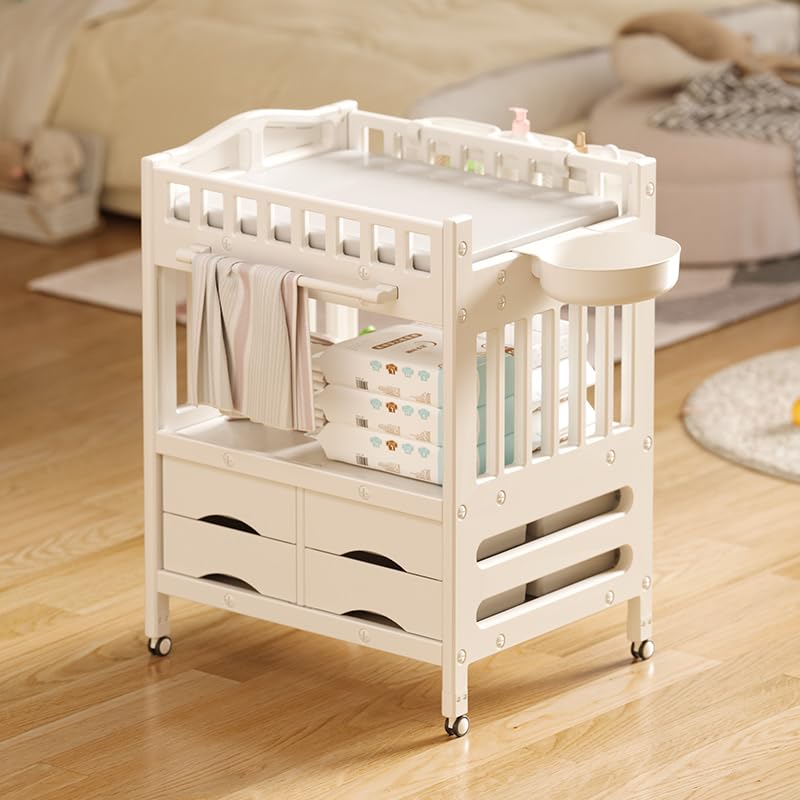
BabyLiv 8-in-1 Deluxe Changing Table
A do-everything unit: a padded changing top at a comfortable standing height, open shelves and hanging pockets for supplies, and — the clever bit — it converts as baby grows, so it isn’t a single-season purchase. Everything you need is within arm’s reach, which matters when one hand is always on the baby.
Best for: parents who want one sturdy station rather than a floor mat, and value a piece that keeps earning its footprint.
Rest & Nurse
Nobody warns you how many hours you’ll spend sitting and feeding. A proper chair that rocks gently and supports your back turns those hours from an ache into a pause. If you buy only one “grown-up” piece for the room, make it this.

Solimo Garcin Rocking Recliner (1-Seater)
A cushioned single-seater that both reclines and rocks — the gentle motion that soothes a fussy baby also happens to be lovely for a tired parent. The back support is genuine (not a flimsy accent chair), and once the baby years pass it simply becomes the comfiest reading chair in the house. Check the current seller, delivery, assembly and return terms; brand ownership is not a guarantee of those terms.
Best for: long feeds, rocking a baby to sleep, and anyone who reads “you’ll be up at 2am anyway” and wants to be comfortable doing it.
Play & Learn
This zone grows with your child. In the first year it’s about keeping toys off the floor; by year two it’s about low, reachable storage that lets a toddler put things away (and pull a book out) all on their own. These three cover the whole arc.
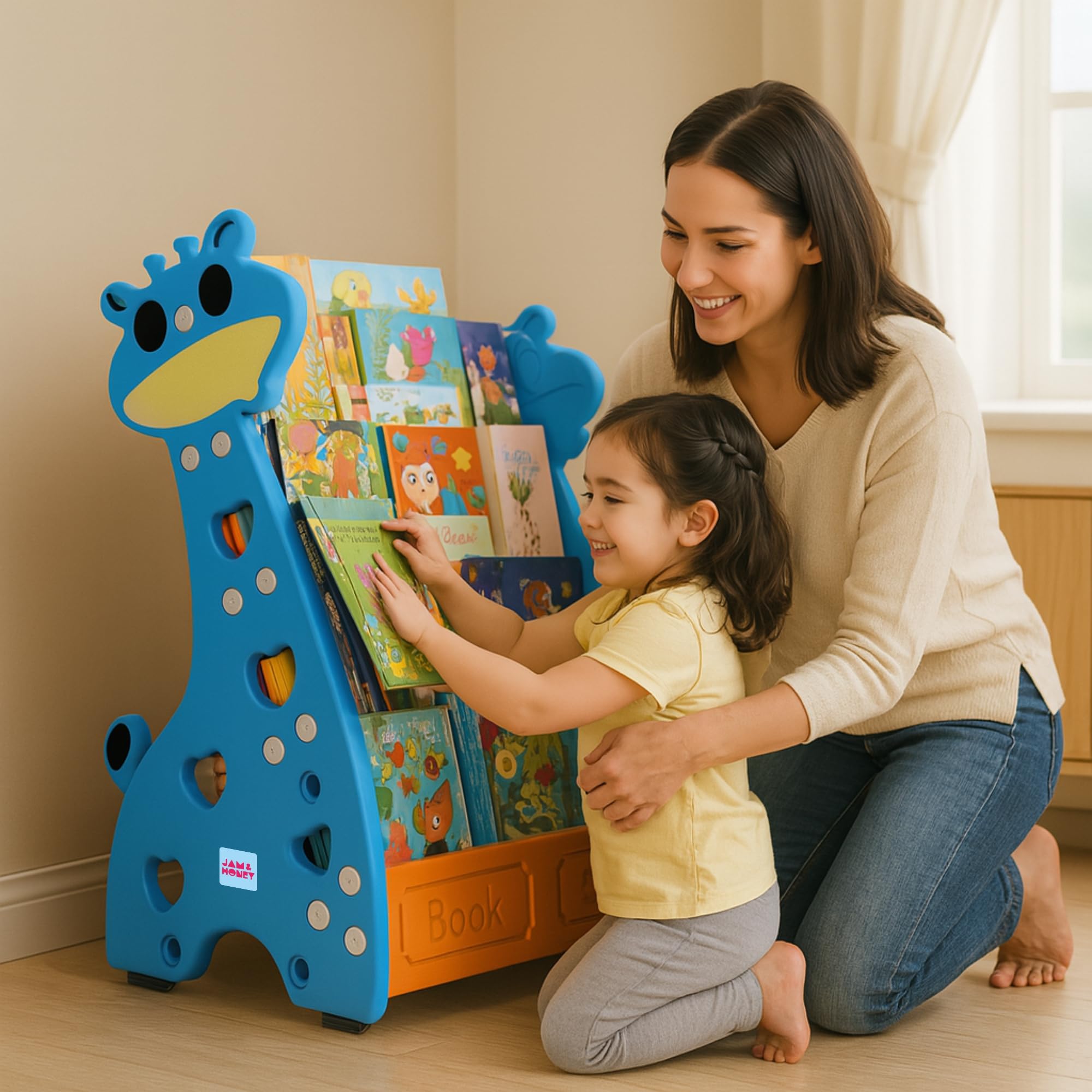
Jam & Honey Animal-Theme Kids Bookshelf
A cheerful 4-tier, front-facing bookshelf — the covers face out, so a child who can’t read yet still recognises and reaches for their favourites. Front-facing display is the single best trick for getting little ones interested in books early. Sturdy, sweet, and low enough for a toddler to browse solo.
Best for: building an early reading habit; works from the board-book stage right through to picture books.
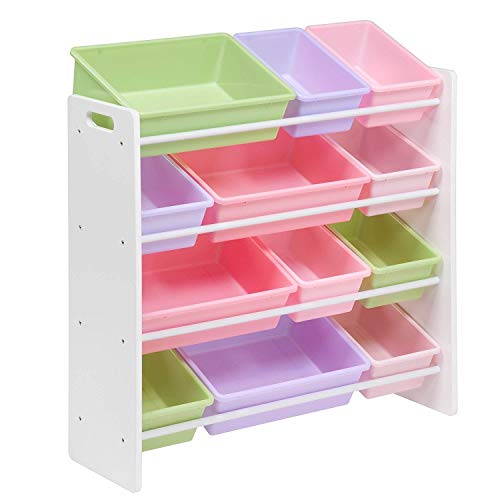
Homesmiths 12-Bin Toy Storage Organizer
A frame of tilted, removable bins in cheerful colours — the format that actually gets toys tidied, because a child can drop things into an open bin far more easily than into a drawer. Sorting by bin (“blocks here, cars there”) sneaks in early categorising skills too. It stays useful for years.
Best for: the toy explosion of the toddler years; teaching independent clean-up without nagging.
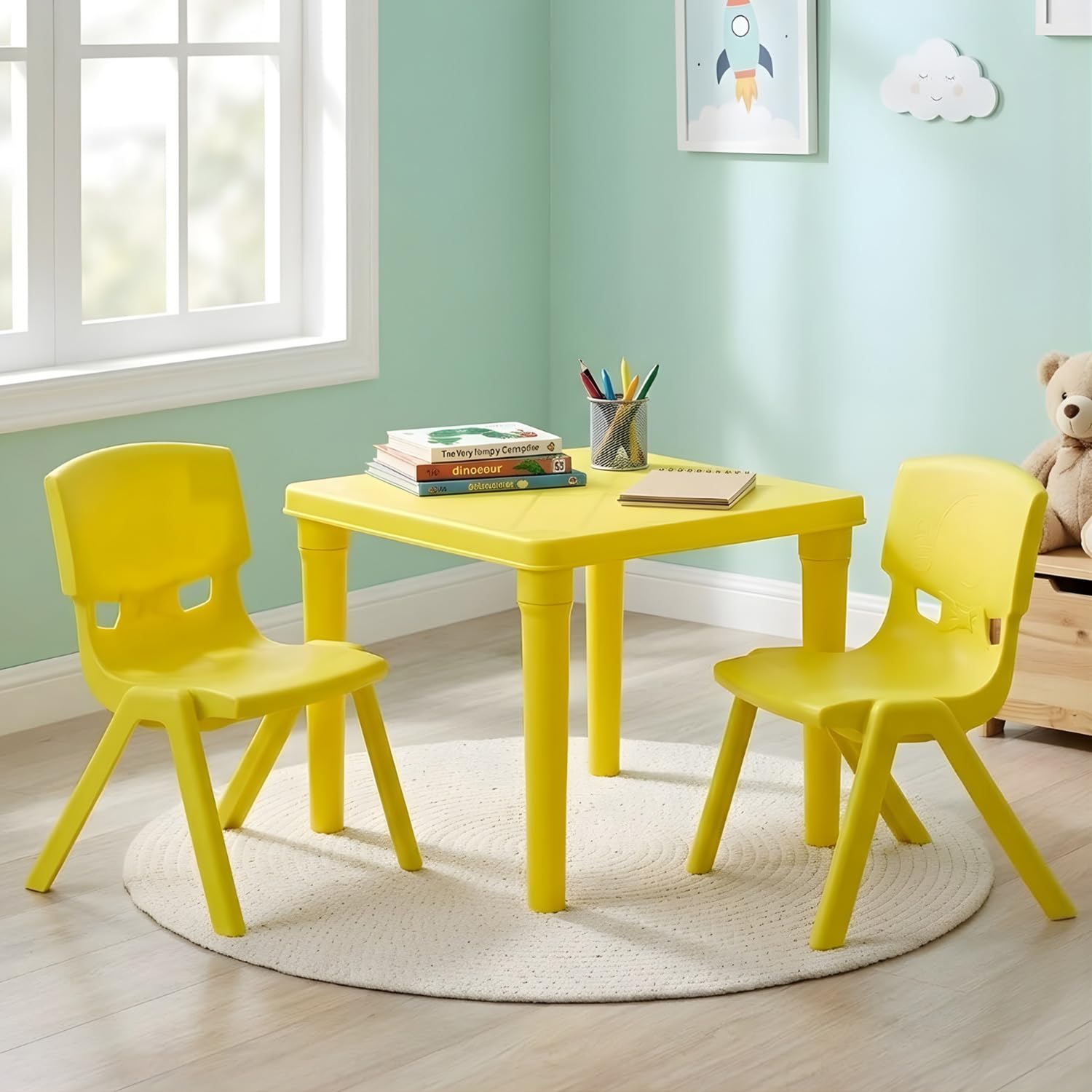
Nilkamal Genius Junior Table & Chair Set
A right-sized table-and-chair set from Nilkamal — a name most Indian homes already trust for plastic furniture that lasts. It’s the spot for scribbling, snacking, puzzles and eventually early writing. Check the current model’s warranty, age and load limits, care instructions and stability guidance. Do not assume any table or chair is tip-proof.
Best for: the 1.5-year-plus stage — a “my own space” that encourages sitting, focusing and creating.
How to furnish a baby room without overspending
- Buy for the job, not the theme. A colour-matched set looks lovely in month one and cramped by month eight. Pick pieces that each solve a real, daily problem.
- Prioritise the back-savers. If the budget is tight, the changing station and the nursing chair matter most — they protect your body through hundreds of repetitions a week.
- Go low and reachable for anything the child will use. Bookshelves, toy bins and tables should be at a toddler’s height so they build independence instead of always needing you.
- Choose wipe-clean and movable. In Indian homes where rooms multitask, light, washable, tool-free furniture that you can shift is worth far more than heavy statement wood.
- Skip the crib bumpers, canopies and “sets”. They add cost and clutter (and bumpers aren’t safe-sleep friendly). Your money is better spent on the four pieces above.
Frequently asked questions
What furniture does a baby room actually need?
Genuinely just four things: somewhere to store clothes, somewhere to change and dress baby, a comfortable chair for feeds, and low storage for toys and books as they grow. A cot, of course — I’ve covered those separately. Everything beyond that is optional.
Do I really need a changing table?
Not strictly — but your back will thank you for one. Changing a nappy 8–12 times a day bent over a bed adds up fast. If space or budget won’t allow it, a firm changing mat plus a well-stocked caddy is a fine minimalist alternative.
Is plastic furniture okay for a baby’s room?
Yes, and for Indian homes it’s often the smart choice — it’s light, wipe-clean, tool-free to assemble, and easy to move as the room changes use. Just buy from established brands and check it’s sturdy and non-toxic.
How do I fit a baby’s things into a small room?
Go vertical and modular: a tall slim wardrobe, a mobile caddy instead of a bulky dresser, and low toy bins that tuck against a wall. Choose pieces that convert or grow with the child so you’re not re-buying every year.
What should I buy first?
After the cot, start with storage (a wardrobe) and a nursing chair — you’ll use both from day one. Add the changing station next, and leave the play-and-learn pieces until baby is sitting up and starting to explore.
My one recommendation
If you buy a single piece from this whole list, make it the Solimo Garcin Rocking Recliner. Storage you can improvise; a comfortable place to feed and rock your baby at 2am, you can’t. It’s the piece I’d tell every new parent not to skimp on — and the one that keeps serving you long after the baby years, as the best seat in the house.
Here’s to a room that grows right along with them,
~ Surabhi
A note: These are research-based comparisons, not hands-on test results. As an Amazon Associate I earn from qualifying purchases. Product availability and options change often, so always confirm the details on Amazon before you buy, and follow each item’s assembly and safety instructions.


