


I’m reader-supported. If you buy through my Amazon.in links I may earn a small commission at no extra cost to you.
A rocking horse can support balance, coordination and imaginative play, but it is still a moving ride-on toy. The safest design is low enough for confident mounting, stable on the intended floor and unable to tip through an excessive arc.
Rocking-horse types worth comparing

Low plastic rocking horse
Why consider it: washable, light to move and usually low to the floor. Watch-outs: check that the base is broad, handles are moulded securely and the motion stops before tipping too far.
Best for: supervised indoor or covered-outdoor toddler play.

Supported-seat rocker
Why consider it: backrest, side support and footrests may help a younger eligible rider stay centred. Watch-outs: a safety ring or belt does not make the toy suitable before the labelled developmental stage.
Check: seat width, restraint design and easy adult access.
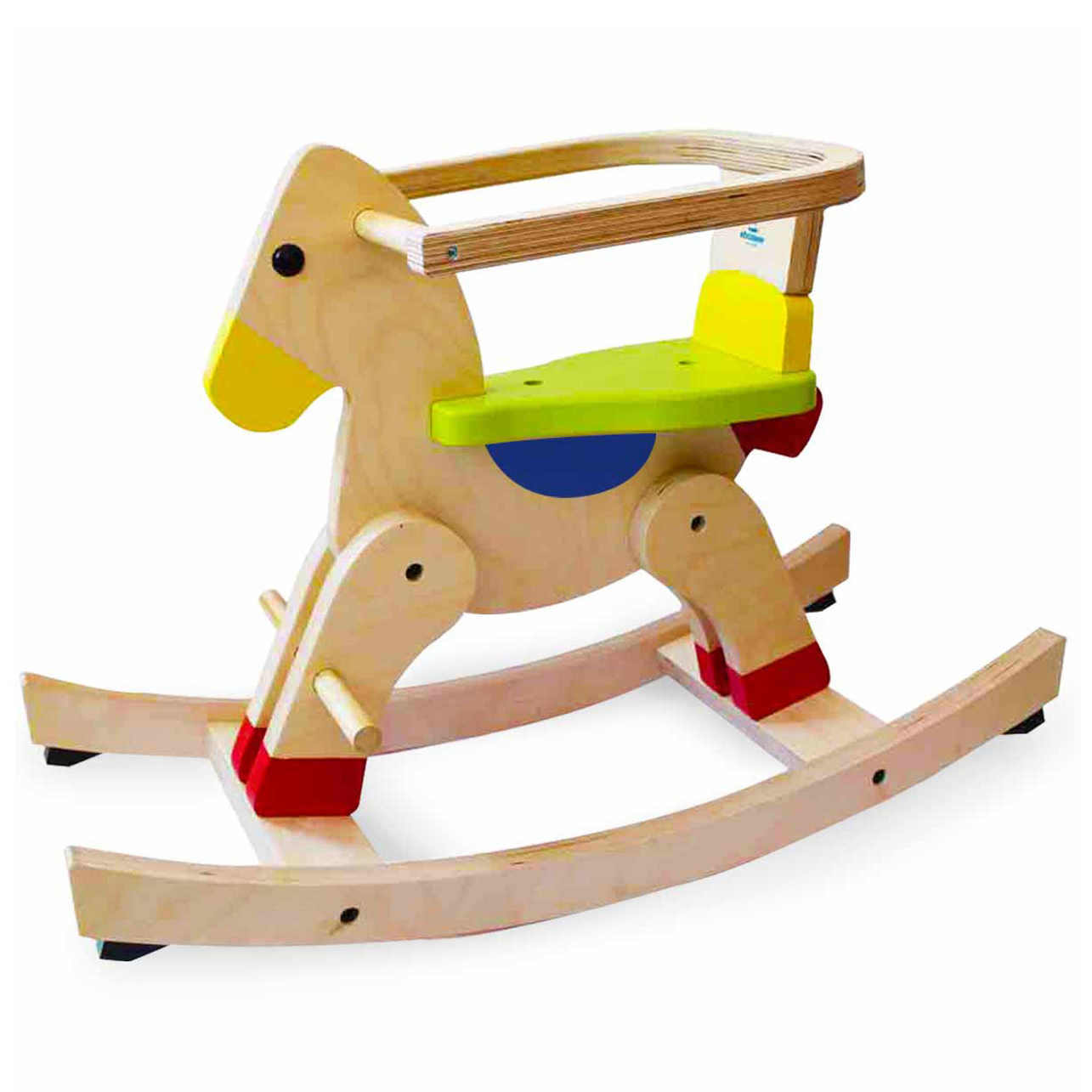
Wooden rocking horse
Why consider it: durable construction, firm footrests and long playroom life when well made. Watch-outs: inspect every edge, joint, screw, handle and rocker stop; re-tighten hardware after assembly.
Best for: families prioritising durability and repairability.

Plush rocking animal
Why consider it: padded body, friendly design and comfortable feel. Watch-outs: fabric traps dust and spills, electronics add failure points, and large plush bodies can hide loose fasteners.
Check: removable/wipeable fabric, batteries and finished dimensions.
Best rocking horse toys: two models worth comparing
These are specification-based buying assessments, not hands-on test results. No rocking horse suits every age. The two examples below preserve the useful comparison from our earlier roundup while separating verified details from uncertain seller claims.
Little Tikes Rocking Horse — Primary Blue
The official Little Tikes listing specifies 12 months to 3 years and a maximum load of 50 lb (about 22.7 kg). It describes a low saddle, easy-grip handles and wide runners for the child’s feet. Overall dimensions are 33 × 10 × 17.5 inches. Confirm these against the label on the model delivered in India.
Why compare it: its simple plastic format avoids the fabric cleaning and battery upkeep of a plush musical rocker. Trade-off: it is a fixed-size toy; the child still needs to reach the handles and foot supports comfortably. The US brand listing does not establish Indian stock, delivery costs or local warranty support. Do not accept a marketplace age claim of one month for this model.
Check Little Tikes listing in India →
Shumee wooden rocking horse
Shumee’s current wooden rocking-horse page describes a U-shaped back/side support, a footrest and rubber sliders intended to limit extreme rocking. These are useful features to inspect, not a guarantee against falling or tipping.
Important age conflict: the page title says 1 year+, while another label says 9 months+. Obtain the exact model instructions and maximum weight from Shumee before buying; do not select the lower age simply because it appears online. A supported seat does not make an unready child an eligible rider.
Why compare it: a wooden model with defined supports may suit a permanent play space. Trade-off: check the assembled footprint, joints, screw tightness and cleaning instructions. Do not assume the older Amazon listing has the same configuration as the current direct-brand model.
Compare the older Shumee listing →
What about Baybee, eHomeKart, BabyGo and plush unicorns?
Compare these by the categories above, but ask for an exact model manual before relying on a brand name, age badge or claimed certification. Rocker-to-ride-on conversions need instructions for each mode and secure locks. A plush unicorn adds fabric and possibly batteries to maintain. Unverified older specifications are not a sound basis for ranking them above a toy whose fit and limits you can confirm.
For the wider decision, our guide to rocking-horse play and safety explains what to consider before adding one to a child’s play space.
Choose by age, ability and fit
Age ranges on listings are not interchangeable. The child must meet the specific product’s guidance and be able to maintain the required sitting posture. Feet should rest securely on the platform or designated footrests, hands should reach both handles and the seat should not allow sliding sideways.
- Do not buy a larger rocker “to grow into” if the child cannot reach the supports.
- Follow the labelled maximum user weight; do not add an allowance or estimate a higher safe load.
- Measure seat height and width, not only the toy’s total height.
- Assess each rider separately and keep the toy away from children who do not meet its instructions.
Safety checklist before every ride
- Place the rocker on a level, non-slip surface away from stairs, balconies, glass and furniture edges.
- Inspect handles, joints, rockers, screws, stitching and restraints for looseness or damage.
- Make sure the rocker stops limit excessive backward and forward motion.
- Keep fingers away from pinch points beneath curved runners.
- Use direct adult supervision; a restraint is not a substitute for an adult.
- Allow one rider only unless the manufacturer explicitly designs it for more.
Plastic, wood or plush?
Plastic is easiest to wipe and suits humid homes or balconies, but thin moulding can flex. Wood is repairable and stable when properly engineered, but poor finishing can splinter and loose hardware needs attention. Plush feels comfortable but requires more cleaning and inspection. No material is automatically safer—the finished geometry and construction matter more.
Measure the rocking space
Allow clearance beyond both ends of the rocker’s arc and on each side. Measure doorways if the toy will move between rooms. A foldable or light plastic option suits compact flats; a heavy wooden rocker needs a permanent play zone where adults will not trip over the runners.
Online buying checklist
- Confirm age, maximum weight, seat height and assembled dimensions.
- Look for rocker stops, footrests, secure handles and a backrest where needed.
- Read the assembly manual and identify whether tools are included.
- Check the seller, return window and process for missing or damaged parts.
- Inspect product photos for accessible screw heads or sharp joins.
- On arrival, assemble fully and test stability with adult hands before the child rides.
Mother Express verdict
For most toddlers, a low, one-piece plastic rocker is the easiest product to clean, move and supervise. Choose a wooden rocker when construction and repairability are the priorities, and a plush model only when you are prepared for extra cleaning and inspection. In every category, fit and controlled motion matter more than sound effects, colour or brand claims.
Frequently asked questions
What age is a rocking horse suitable for?
Only when the child meets the individual manufacturer’s age, developmental and weight guidance and can use the seat, handles and foot supports as designed.
Is wood safer than plastic?
Neither is automatically safer. Stability, rocker geometry, finish, construction, fit and condition matter more than material alone.
Does a rocking horse need a seat belt?
Some supported-seat designs include one, but it does not replace supervision or make the toy suitable for a child below the stated age or ability.
Can it be used on tiles?
Only if the manufacturer permits it and the base does not slide. A level, non-slip play surface with clearance is essential.
How often should I inspect it?
Give it a quick check before each ride and a more thorough hardware, seam and rocker inspection regularly and after any fall or move.
Product images illustrate categories; stock and designs change. Always follow the current manufacturer instructions.


